Moving to Mallorca: The Complete Guide for 2026
Moving to Mallorca: The Complete Guide for 2026
Mallorca has become one of Europe’s most popular places to relocate to, whether full time, for half the year or as a base for flexible working. Moving here is straightforward once you know the order of the paperwork. This guide sets out the steps, the costs and the decisions that matter most.
At a glance
- You need an NIE (foreigner’s tax number) for almost everything: buying, renting, banking and utilities.
- EU citizens staying more than three months register as residents and pay a €12 fee.
- Register on the padrón at your town hall: it unlocks healthcare, schools and local services.
- Spending more than 183 days a year in Spain generally makes you Spanish tax resident.
- The island has around 19 international schools and direct flights to more than 160 destinations.
Step 1: get your NIE
The NIE is your identification number in Spain. It costs only a small government fee, but appointments can take weeks, so apply early. EU citizens who are moving permanently often receive it directly with their residence registration. Non-residents buying a holiday home apply for the NIE on its own.
Step 2: register on the padrón
Empadronamiento is registration with your town hall. It is free and usually done on the day, with your rental contract or title deed and a recent utility bill. The padrón certificate is needed for healthcare, school places and several local discounts.
Step 3: register as a resident
EU citizens who stay longer than three months must register within three months of arrival and receive the Certificado de Registro (often called the “green NIE”). The government fee is €12. If you are not working in Spain, you must show health insurance and sufficient funds. Non-EU citizens need a visa route, such as the non-lucrative visa or the digital nomad visa; Spain’s Golden Visa closed in April 2025.
Step 4: healthcare
- Working in Spain: you are covered through Spanish social security.
- EU pensioners: the S1 form from your home country gives access to Spanish public healthcare.
- Everyone else: private health insurance, typically required for residency, or after 12 months of residence the regional public scheme (convenio especial), around €60 a month under 65 and €157 from 65.
Mallorca has around 15 hospitals and major medical centres, including excellent private clinics in Palma.
Step 5: understand tax residency
If you spend more than 183 days a year in Spain, or your main economic interests are here, you will generally be tax resident and taxed on worldwide income. Double taxation treaties prevent you being taxed twice, but planning before you move matters. For wealth tax, the Balearic Islands raised the exemption threshold to €3 million in 2024, and residents also benefit from an allowance on their main home. Always take advice from a Spanish tax adviser.
Cost of living
Day-to-day costs such as eating out, groceries and services are generally lower than in Northern Europe, while housing is the big exception. Average rents in Palma were around €18.70 per m² at the start of 2026, and long-term rental supply is tight, which is why many people who relocate decide to buy. Property prices across the island averaged around €4,700 per m² for houses and €5,380 per m² for apartments in mid-2026; see our 2026 price guide.
Where to live
- Palma: city life, culture, restaurants and the airport 15 minutes away.
- Son Vida, Bendinat and Puerto Portals: family-friendly, close to international schools and golf.
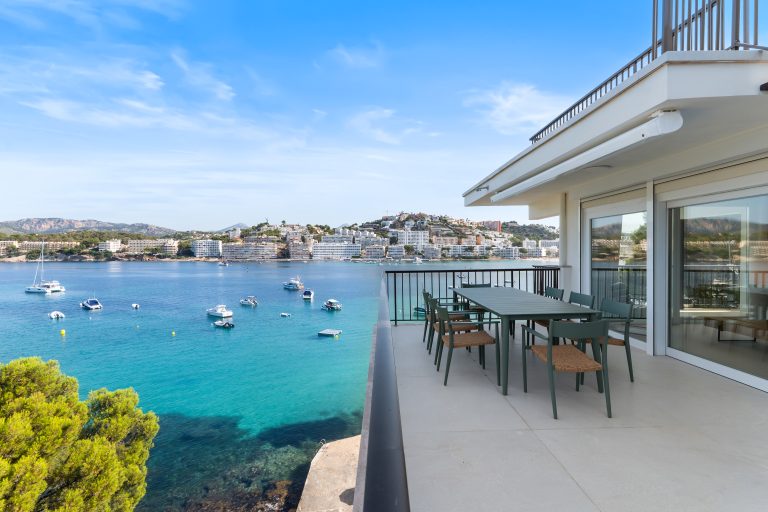
- Port d’Andratx and Santa Ponsa: the international southwest, with marinas and sea views.
- Sóller and Deià: mountain villages and a strong year-round community.
- Santanyí and Pollença: quieter, authentic towns near the coast, popular with long-stay owners.
Rent first or buy?
Renting for a few months lets you test areas and seasons. Buying gives security in a market where good long-term rentals are scarce. Many of our clients rent briefly while we search, then buy once they know where they want to be. Whether you are looking for an apartment, a villa or a finca, budget around 11–14% on top of the price for taxes and fees on a resale home; our cost guide explains each item.
Moving to Mallorca is easy when the steps happen in the right order: NIE, padrón, residency, healthcare and tax advice before you arrive, not after.
We help international families and professionals find the right home and introduce trusted lawyers, gestores and tax advisers. Start with a private search and tell us how you want to live.
Sources: Real Decreto 240/2007 and Spanish government fee schedules; IB-Salut convenio especial rates; mallorca.com relocation guides (2026); Knight Frank, Mallorca Residential Market Insight (2026); Engel & Völkers asking-price data (June 2026). This guide is general information, not legal or tax advice.
Thinking of buying or selling in Mallorca?
Speak to us in confidence. We give honest, independent advice on value, timing and strategy, with no pressure.
Speak to James